
Telkomsel MyEnterprise Unified
The difference between Telkomsel MyEnterprise Unified and Telkomsel MyEnterprise is that the former is an internal platform for Telkomsel employees, while the latter is a public platform for corporate customers.
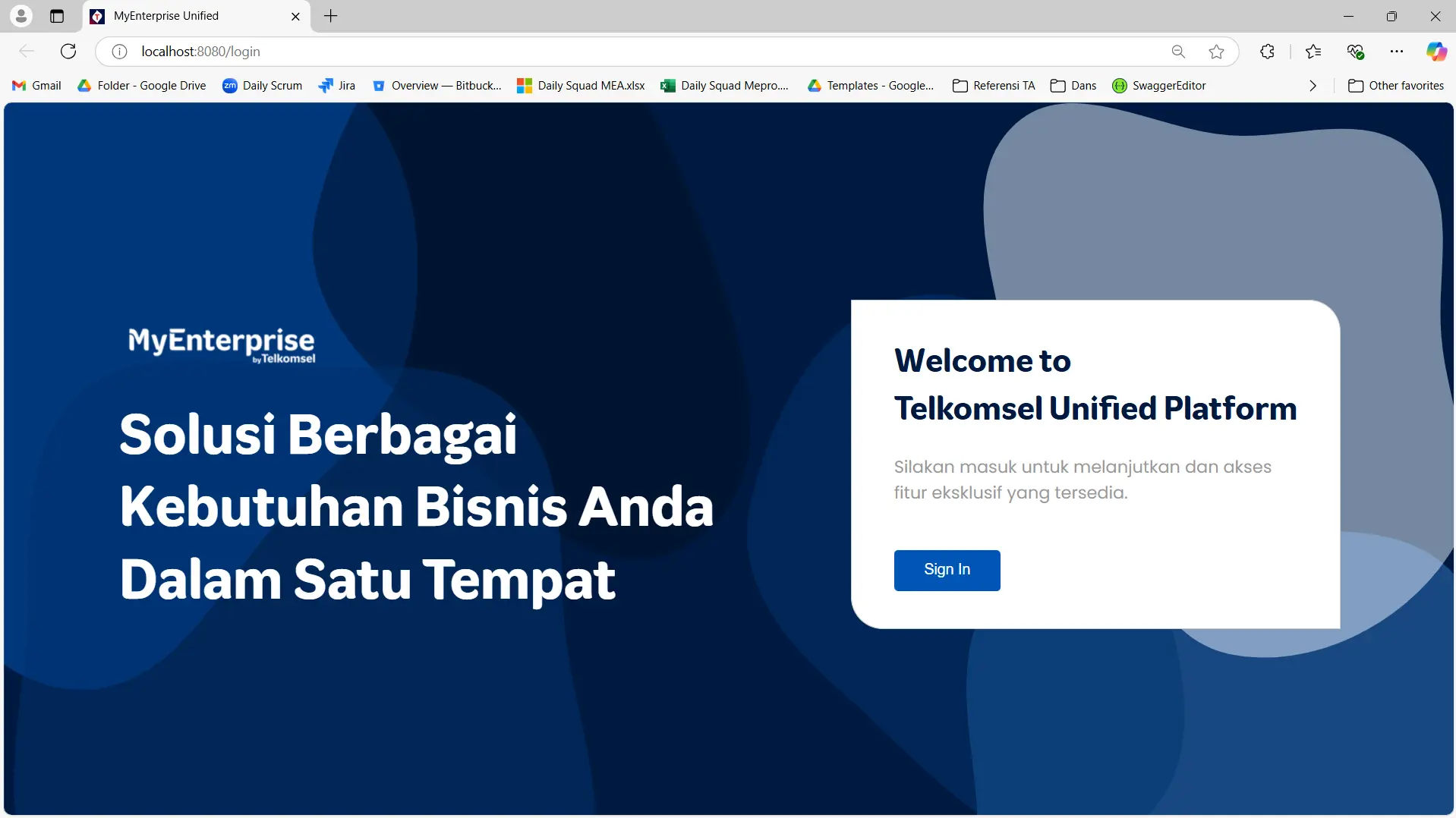
In this project, my focus is both on backend and frontend development
The architecture of the project is based on a microservices approach on backend, and microfrontend approach on frontend. Using HapiJs as a backend framework and the ReactJs as a frontend framework.
Contributions
Frontend
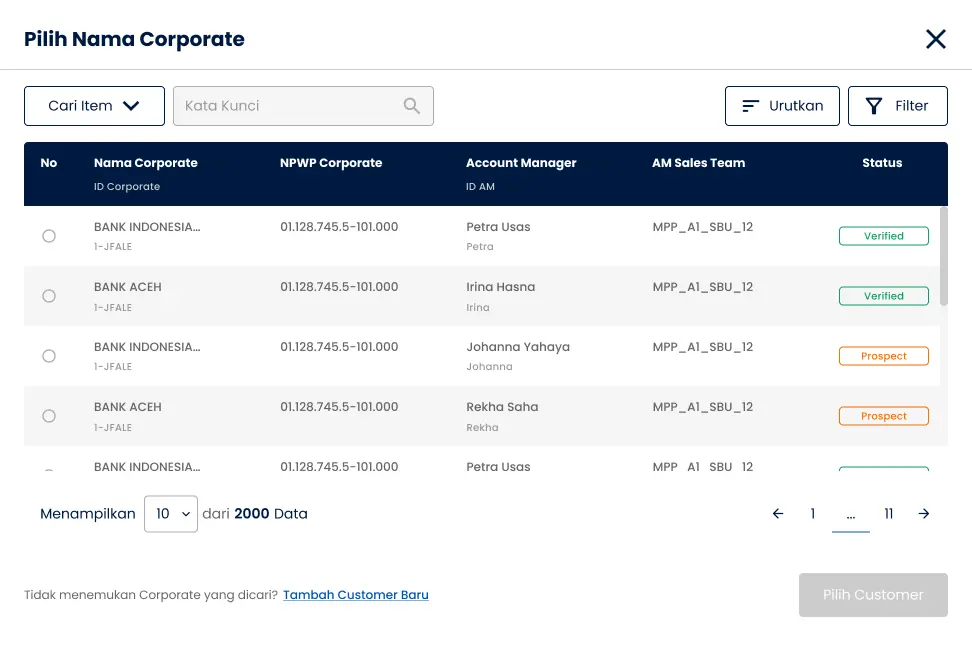
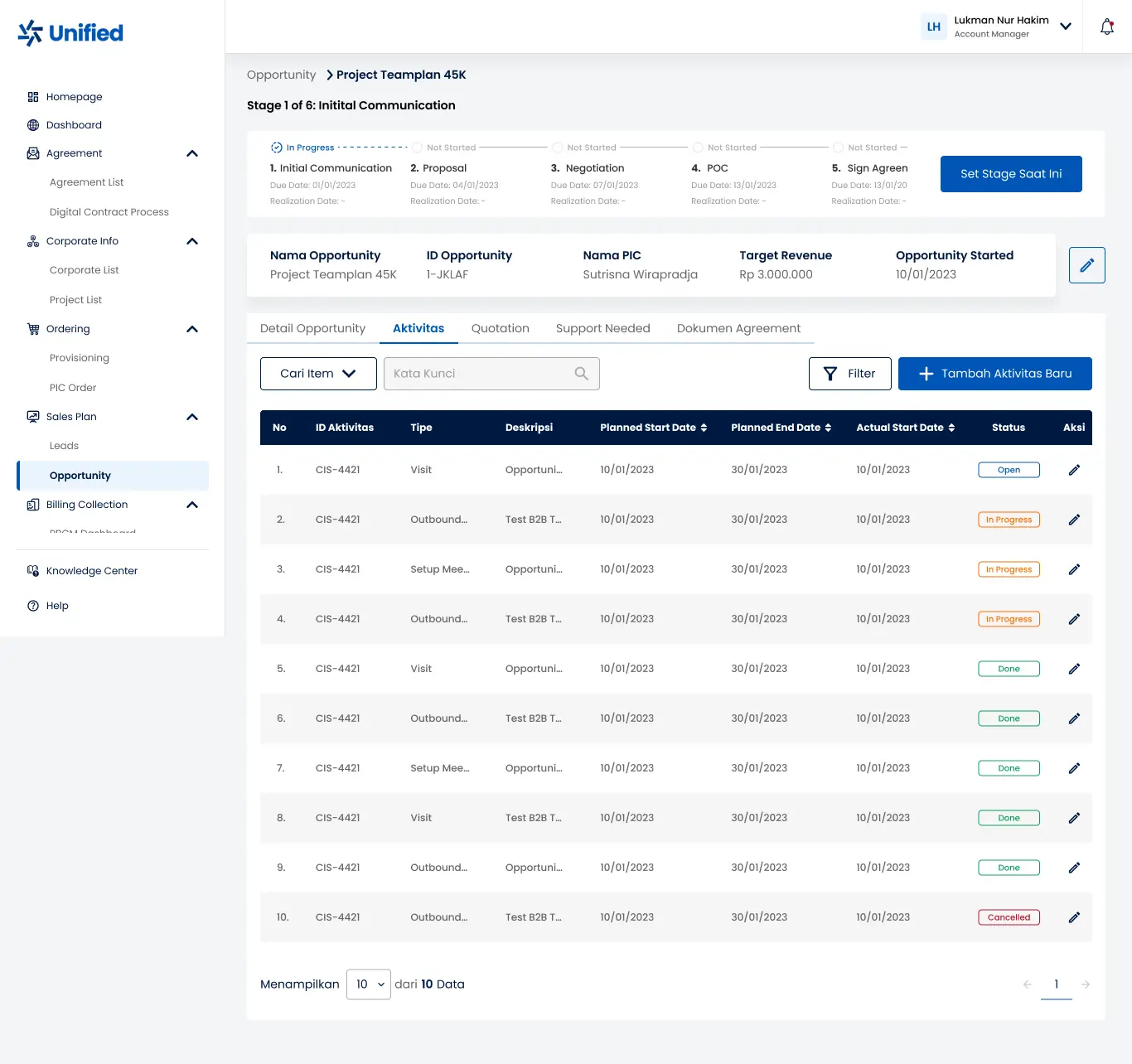
- Create a table with a list of data that include sorting, filtering, and pagination features. The data is fetched from the backend API and displayed in a user-friendly format.
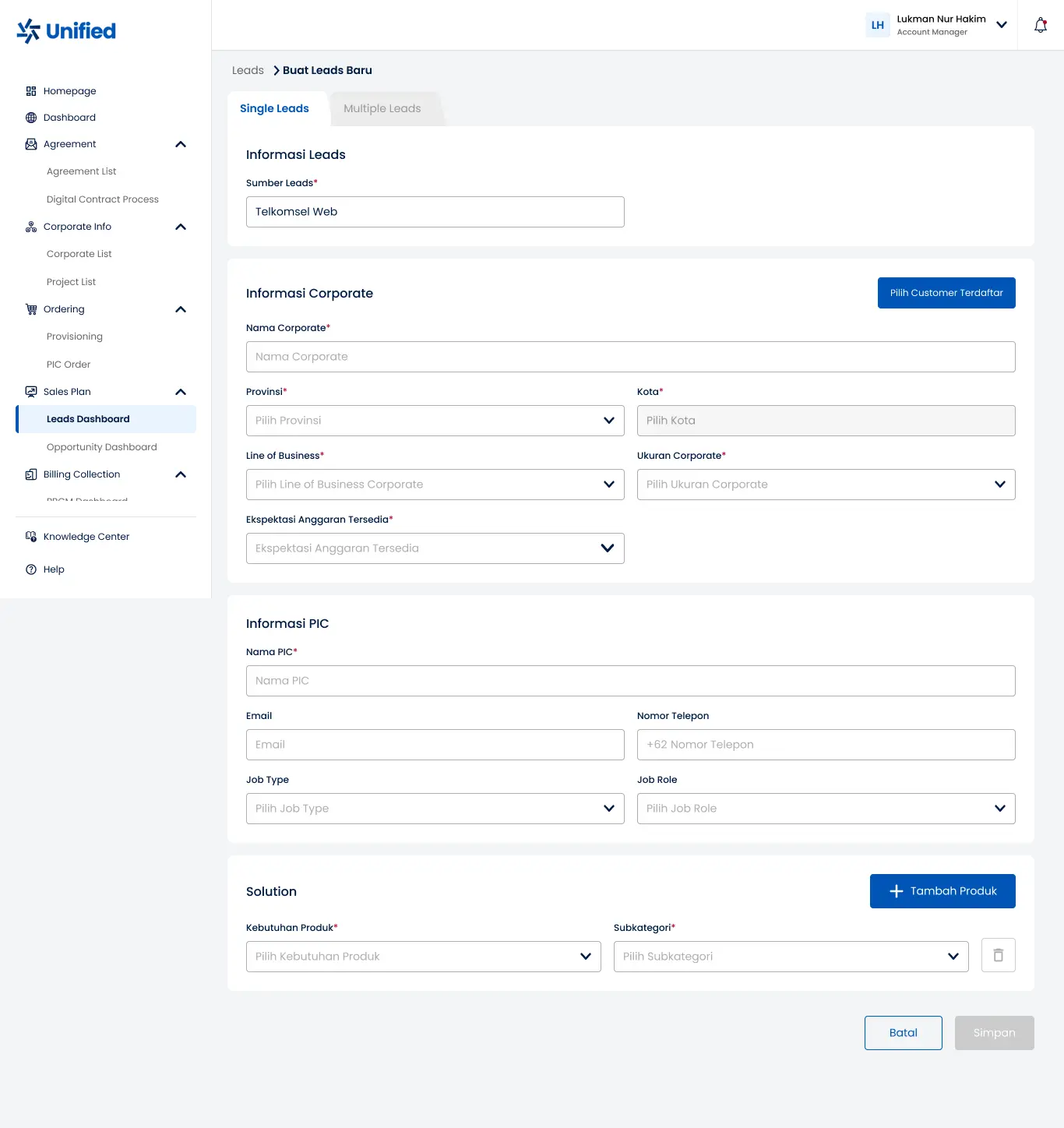
- Create a multi step form with validation feature. The validation is done on the frontend and on the backend to ensure data consistency and integrity.
- Create a detail page that displays information about a specific data. The page includes a summary of the data, as well as additional details and actions that users can take.
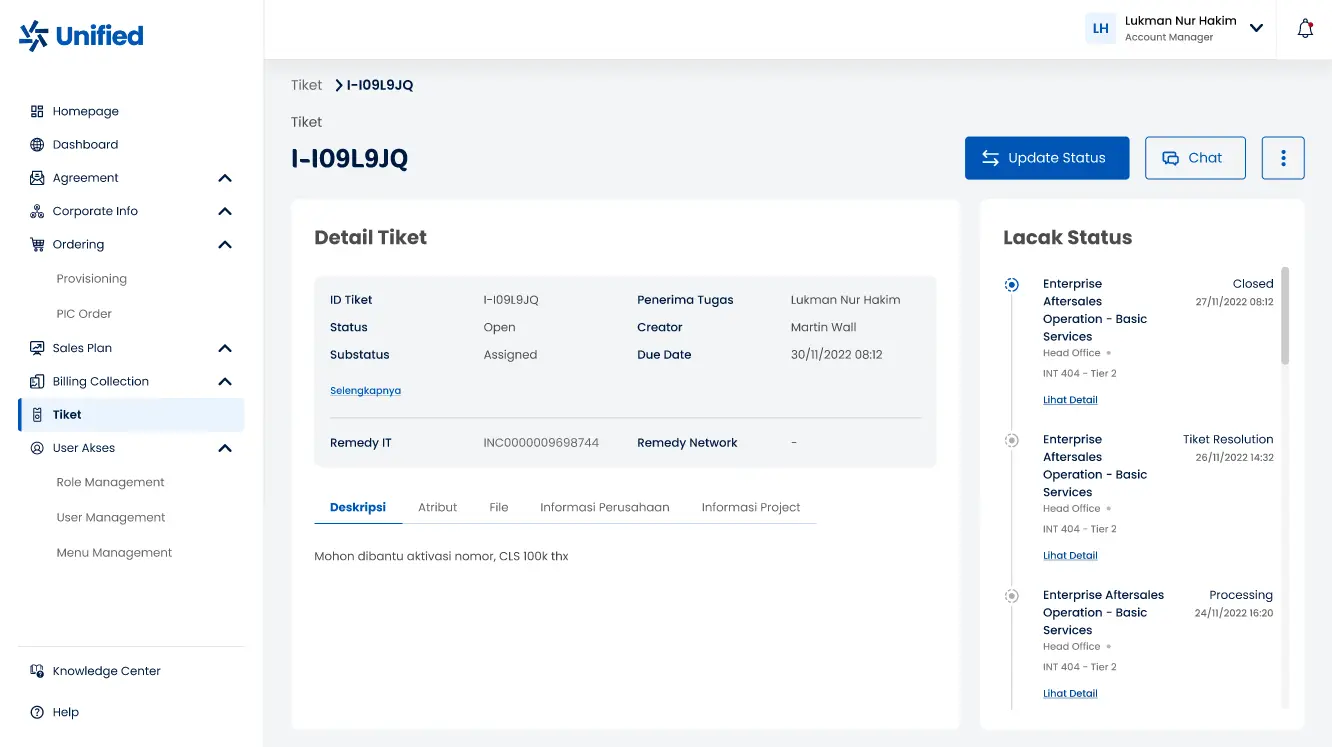
- Create a page with multiple tabs that display different sets of data. Users can switch between tabs to view different information and perform various actions.
Backend
- Create api to manage RBAC (Role Based Access Control) for the platform, and integrate the RBAC to external service from different vendor based on Interface Agreement.
- Create api to manage authentication this includes create password, generate SMS OTP and verify user.
- Create a custom plugin for Kong API Gateway to manage the authentication.
- Create api to get list of data, create data, update data, and delete data. This api is used by the frontend to interact with the backend.
Unfortunately, I can't share the codebase for this project due to the company's policy and non disclosure agreement.
Technologies Used
There are a lot of technologies used in this project, but my main focus for the given tasks are:
- ReactJs - Frontend
- HapiJs - Backend
- MySQL - Database
- Redis - Cache
- Kong - API Gateway
- Docker - Containerization
- Jenkins - CI/CD